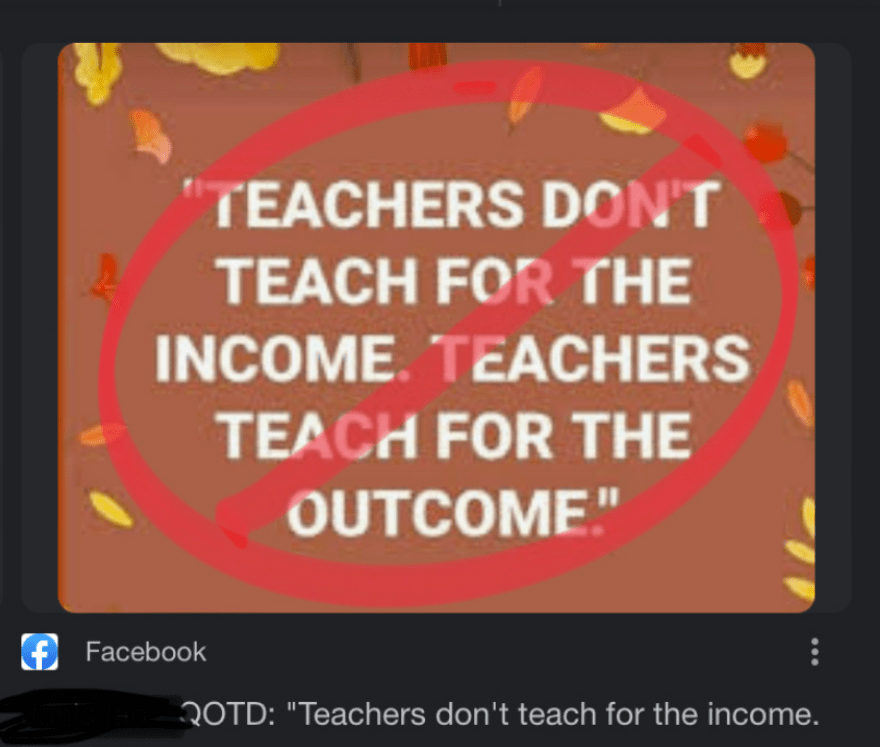
If all can love their work, why should some be paid less?
At my house, this is the best time of the year. As fall is poised to arrive, football season and school are both about to start. What could be better for a household of educators who love sports?! It also makes me think about the season and the school year to come.
Many professional athletes are quoted at the start of the season as loving their work. They have a “love of the game” in much the same way teachers are quoted as loving their students at the start of each year. Both can’t wait to get back into their element, either the field or the classroom. And we love them for that love—we worship athletes for their commitment to their craft and we buy their jerseys; we love our teachers and remember their impact on our lives.
The difference is that our society does not compensate this love for the chosen professional the same. It’s not a perfect comparison, admittedly, yet it does show where our culture is willing to invest. For educators, we praise them for their selflessness, their compassion and caring, their creativity, but we do not create and fund professional compensation models.
Teaching, the art and science that it is, is cultivated by practice, the same as top athletes. They clearly meet the 10,000 hour metric we’ve read about recently. Calculating conservatively, at eight hours a day for 180 instructional days per year, teachers reach this mark in under seven years. Here in North Carolina, after those 10,000+ hours, a teacher entering year eight will earn $45,000.
In North Carolina, we seem more willing to create a mindset of professional altruism for educators than we are willing to compensate them for their skills and expertise. Educators’ efforts, their investment in our children makes the world a better, kinder place–no doubt, but it’s so much more than that. They cultivate creative thinkers, prepare an educated citizenry, and foster teamwork and individuality. And for that effort, some leaders seem to believe that educators should embrace the altruistic benefit to their health and well-being, but not necessarily in their bank account.
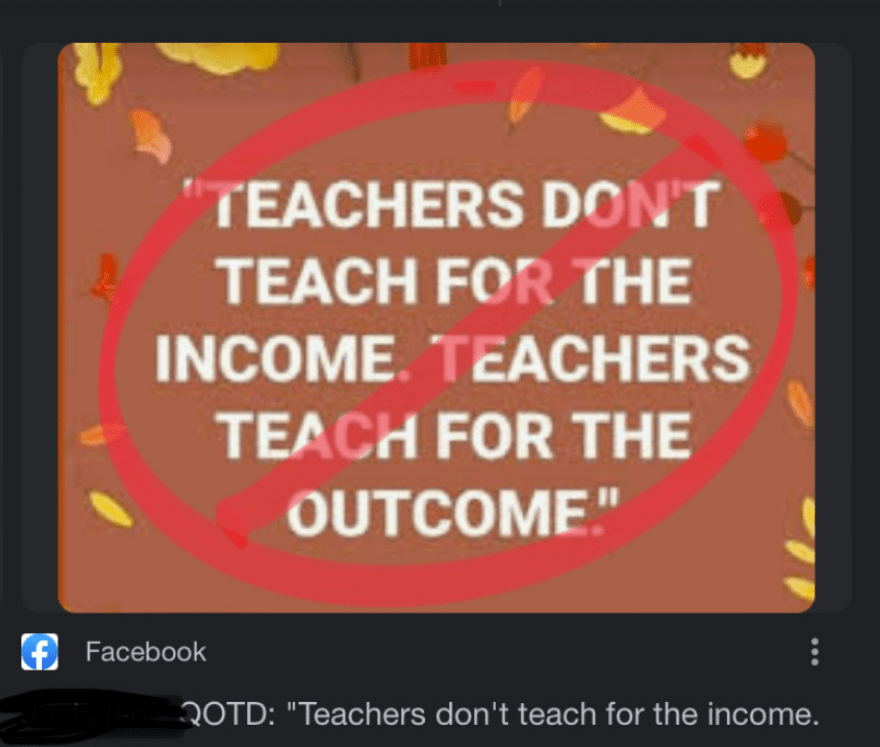
I contend that we need to remove professional altruism as a hidden, unstated part of our compensation models for educators. We must dispel idea that educators are “in it for the outcome, not the income” as it is not only unfair but also creates a false dichotomy between the passion for and compensation from one’s profession. Memes that circulate on social media perpetuate a professional altruism myth and undermine the skills and expertise teachers cultivate over years of practice. For educators, such clichés create a never-ending cycle where their professional expertise is not, and will not be, professionally compensated. This must end.
 CraftyProfs